
New Dietary Guidelines: Less Sugar, More Protein, and a Return to Real Food
The new dietary guidelines signal a long-overdue correction: less added sugar, fewer ultra-processed foods, and more emphasis on protein and real, nutrient-dense meals. This isn’t a fad. It’s the nutritional “undo button.”
Quick note: Your SEO title, meta description, and slug are set in your SEO plugin/page settings—not inside this HTML widget. But everything below (images, alt text, internal links, headings, and keyphrase density) is fully handled right here.

Why the New Dietary Guidelines Matter
For decades, Americans were told to fear fat, limit meat, and lean hard on grains and “low-fat” packaged foods. In the real world, that era didn’t produce a healthier population—it produced a sicker one.
Obesity rates climbed. Diabetes became common. Chronic inflammation went mainstream. And while the debate stayed loud, the food supply quietly shifted toward more sugar and more processing.
That’s why the new dietary guidelines feel historic to so many people: they finally point back toward what works in real life— less sugar, less ultra-processing, and more protein from foods your body recognizes.
If you’re new here, start with our practical breakdown of what ultra-processed foods are and why they’re so hard on metabolic health. Then check out our guide on why protein matters after 40.
Less Sugar: The Shift That Changes Everything
Let’s be blunt: added sugar isn’t just “empty calories.” It’s a metabolic wrecking ball when it becomes a daily habit— especially in drinks, snacks, and “healthy” packaged foods that quietly pile it on.
Excess added sugar is strongly associated with:
- Insulin resistance and blood sugar instability
- Type 2 diabetes risk
- Fatty liver and metabolic dysfunction
- Inflammation and cravings that feel “mysterious” until you track them
The reason people celebrate the new dietary guidelines is simple: this is a public, institutional acknowledgement that sugar-heavy modern eating has consequences—and cutting it matters.
For additional official resources on whole-food choices, you can also visit RealFood.gov.
More Protein: The Foundation Returns
One of the most important and misunderstood parts of the new dietary guidelines is the renewed emphasis on protein. For years, protein—especially animal protein—was treated like a problem to manage instead of a foundation to build on.
Protein supports:
- Muscle preservation and strength (especially as we age)
- Satiety (feeling full) and appetite control
- Stable energy and fewer cravings
- Immune function and recovery
This doesn’t mean you “must eat steak every day.” It means you stop building meals on flimsy fuel and start building meals around nutrient density.

Ultra-Processed Foods: The Quiet Villain
Here’s the part that doesn’t get enough attention: ultra-processed foods aren’t just “convenient.” They’re engineered for overconsumption and made for shelf life, not human health.
Ultra-processed foods tend to be:
- Hyper-palatable (hard to stop eating)
- Low in satiety per calorie
- High in refined starches, added sugars, and industrial ingredients
Reduce ultra-processed foods and most people experience predictable changes: fewer cravings, steadier energy, and easier weight control. That’s why the new dietary guidelines matter—because “real food first” is the beginning of reversing modern metabolic damage.
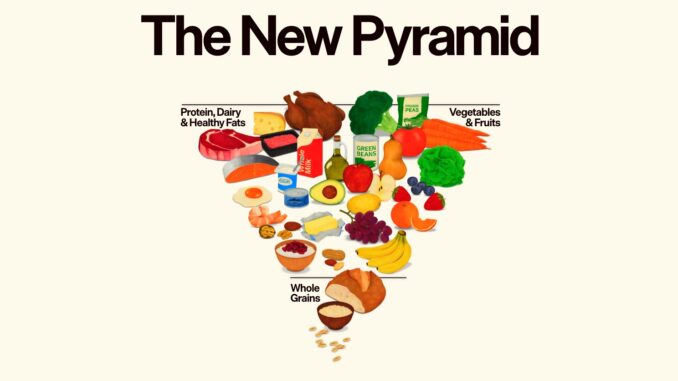
The Inverted Food Pyramid: When Reality Flipped the Old Model
The easiest way to understand the cultural impact of the new dietary guidelines is this: it feels like an inverted food pyramid.
In the old model, the base was heavy starch and “low-fat” products, while meat and fat were treated with suspicion. In the inverted model, the base becomes protein + whole foods, while sugar and ultra-processed food drop to the bottom.
That shift aligns with what people experience when they clean up the diet: hunger stabilizes, cravings fade, and energy returns—without needing to live inside a tracking app.
How to Apply the New Dietary Guidelines at Home
You don’t need perfection. You need clarity. Here’s how to apply the new dietary guidelines without going extreme:
- Cut added sugar (especially liquid sugar—soda, sweet coffee drinks, “healthy” juices)
- Eat protein at every meal (eggs, meat, poultry, dairy if tolerated, legumes if preferred)
- Center whole foods (vegetables, fruit, simple starches as needed)
- Use natural fats in normal amounts (instead of chasing “low-fat” labels)
- Keep ultra-processed snacks out of the house (your willpower is not a superhero)
Want a simple start? Try this for 7 days: cut added sugar, eat protein at breakfast, and remove ultra-processed snacks. Most people notice meaningful changes quickly—because your body responds to inputs, not slogans.
Next reads you may like: seed oils vs natural fats and a real food shopping list you can actually use.
Simple Takeaways
- Less sugar improves cravings, energy, and metabolic stability.
- More protein supports strength, satiety, and long-term resilience.
- Less ultra-processed food is one of the fastest ways to improve real-world health.
- Real food wins because the body recognizes it—and responds to it.
FAQ
Are the new dietary guidelines telling everyone to eat more meat?
The practical message is to prioritize adequate protein and reduce added sugar and ultra-processed foods. For many people, that means incorporating more protein-dense foods than they currently eat.
Do I need to track macros to follow the new dietary guidelines?
No. Start with food quality: less sugar, fewer ultra-processed foods, and protein at meals. Many people see improvements without tracking anything.
What’s the fastest change that helps most people?
Remove liquid sugar, remove ultra-processed snacks, and add protein to breakfast. That combo often changes hunger and cravings fast.
What about vegetables and fiber?
They still matter. “Real food” includes vegetables. The shift is about removing processed junk and rebuilding meals on protein and whole foods—not skipping plants.